
Doing IPS, PhD seminar series 2026/27: Call for papers
Deadline Extended to 13 July 2026
Aims
Into its 9th year, the ‘Doing IPS’ PhD Seminar Series introduces graduate students to research inspired by International Political Sociology’s (IPS) commitment to challenge methodological and conceptual assumptions in their research disciplines, and ask new questions about transdisciplinary modes of inquiry. It addresses the need for doctoral candidates to have a forum dedicated to IPS where they can: (1) present their work and receive feedback from peers and senior academics in the field; (2) engage with contemporary IPS research designs and debates; and (3) develop transdisciplinary and cross-institutional relationships with a view to facilitating further discussions and collaborations around common research themes. Lastly, the series will strengthen the analysis and evaluation skills of early-career researchers.
IPS is a collaborative intellectual project that seeks to challenge the fundamental oppositions within traditional theorising, such as that between politics and society, the individual and the collective, structure and agency, internal and external, international and national, or local. Scholarship inspired by an IPS-approach centres around two related methodological orientations: firstly, understanding the everyday and situated practices as the primary site of power relations, and secondly, thinking processually and relationally. Thinking and writing from an IPS tradition is an active process, with motion and movement as a central concern. In lieu of fixed and unchanging phenomena, IPS emphasises flows, networks, conjunctures and connections, disjunctures and disconnections, tensions, frictions, accelerations, entanglements, crystallisations, relations, alterities, differences, and multiplicities. Broadly speaking, IPS asks, “what are the connections between the international, the political and the social?” Contemporary IPS analyses embrace ethnographic and other anthropological and sociological methodologies, and employ a range of conceptual traditions, including (but not limited to) deconstruction, Foucauldian, Bourdieusian, postcolonial and decolonial, queer and feminist, assemblage and materiality, Deleuzian, and critical race theory. IPS has a particular interest in transversalising the international, social and political, and interrogating the conceptual and methodological renditions of temporal and spatial boundaries, limits and borders.
Contemporary Themes in IPS
As a transdisciplinary, problem-oriented, and methodologically open research field, IPS covers a broad spectrum of themes. The list below highlights the main themes emphasised by the seminar series in its recent iterations, but the series remains open to IPS-inspired contributions on other topics.
Migration, mobility, and borders/border management
Conceptions of the planetary, the global, and the international
Time & temporality and space & spatiality
Citizenship, sovereignty, and exception
Resistance
The politics of (in)security
Surveillance
Technology and STS (Science & Technology Studies)
Racialisation, racism and coloniality
Socio-legal studies and human rights
Transnational sociology of expertise
Innovations and interventions in critical theory and methodologies
Ethnography and fieldwork methodologies
Doing IPS Seminar Series - Programme and Structure
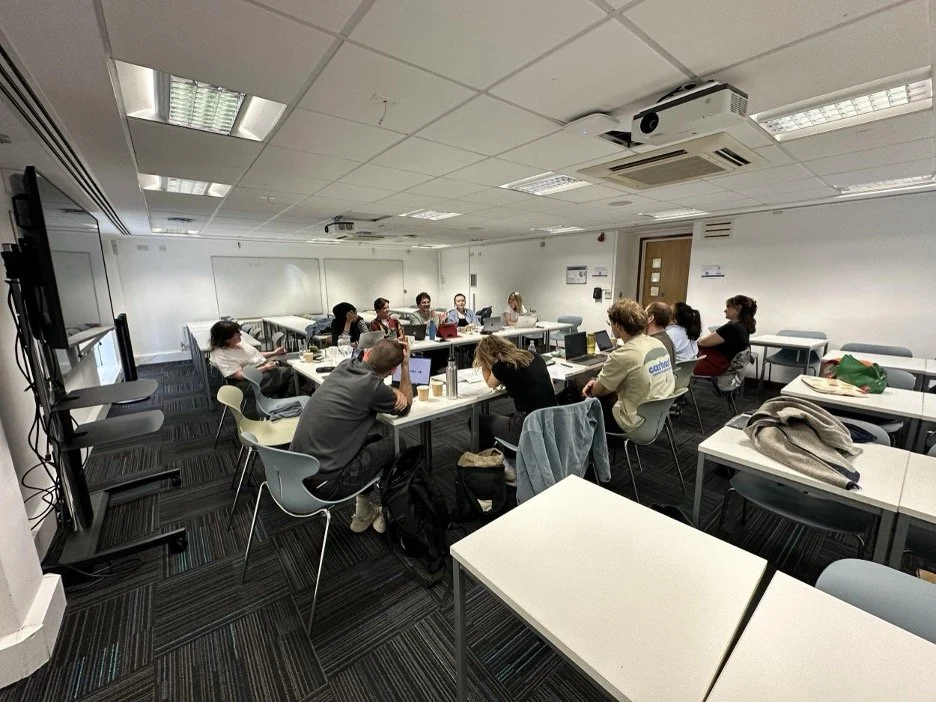
The series runs over a period of 10 months, starting from September, usually meeting on the last Friday of each month for two hours and fifteen minutes in the afternoon. The seminar series is jointly organised by King’s College London, Queen Mary University of London, and the University of Warwick. The seminars will rotate between King’s College London and Queen Mary University of London, and will take place in-person. Senior discussants are also able to join online. The series also includes a Special Session that will be held at the University of Warwick.
Standard sessions
In each two-hour seminar, two participants will present a piece of work-in-progress (around 8,000-10,000 words of a thesis chapter, book chapter, or journal manuscript) to the group. In preparation for the session, each presenter will invite a senior academic to act as discussant for their paper. Additionally, a PhD student participant would be appointed as the second discussant by the seminar convenors to encourage peer review and participation. The discussion will be followed by questions and answers with the audience. Each presenter is allocated one hour, and all participants are expected to have read the papers in advance. Presenters are encouraged to invite their supervisors and colleagues interested in their work.
Special Session
The Special Session will take place at the University of Warwick and will connect the series participants to other junior and senior academics working in IPS, broadly defined. In addition to the usual work-in-progress-based discussion, this longer event will also feature roundtables and/or workshop-format sessions around IPS research and approaches, as well as ECRs development.
Key information
We invite applications from doctoral students in any discipline across the social sciences and humanities.
Please be aware that this is a forum for extensive and engaged discussion of your work, a commitment to attend all seminars throughout the year, as well as to participate actively in the discussions, is expected from participants.
The Doing IPS Seminar series will take place in-person, hence priority will be given to participants who can commit to coming in-person to the sessions. We understand travel will not always be possible, but we are seeking to, once again, foster a supportive and collegial environment, which is best facilitated by an in-person experience.
Limited travel and accommodation grants are available for participants based outside London (to be considered on a case-by-case basis upon confirmation of funds).
How to apply
Applications to the PhD seminar series should include:
A short bio (name, institutional affiliation, the year of your PhD, prospective thesis submission date, keywords that describe your research interests)
An explanation of how your work relates to IPS (broadly defined) (100 words)
Title and abstract of the work you want to present (250 words)
Whether you would like to apply for a travel grant (if you live outside of London) should these become available
The months in which you would be available to present your paper (you need to give a minimum of three different months as options).
Please send your application to ips.phd.seminar@gmail.com
The deadline for applications has been extended to Monday, 13th July 2025 at 5 pm BST. Notifications of acceptance will be sent by 2 August 2025.
Please email us at ips.phd.seminar@gmail.com if you have any questions or queries.
Doctoral student organisers
Madeleine Berry, School of Society and Environment, Queen Mary University of London
Antonia Zawalski, Department of War Studies, King’s College London
Manjima Anjana, Department of Politics and International Studies, University of Warwick
Senior academic organisers
Jef Huysmans, Professor of International Politics, School of Society and Environment, Queen Mary University of London
Hannah Owens, Assistant Professor in International Relations, Conflict and Security, Department of Politics and International Studies, University of Warwick
Mirko Palestrino, Senior Lecturer in International Political Sociology, School of Society and Environment, Queen Mary University of London